
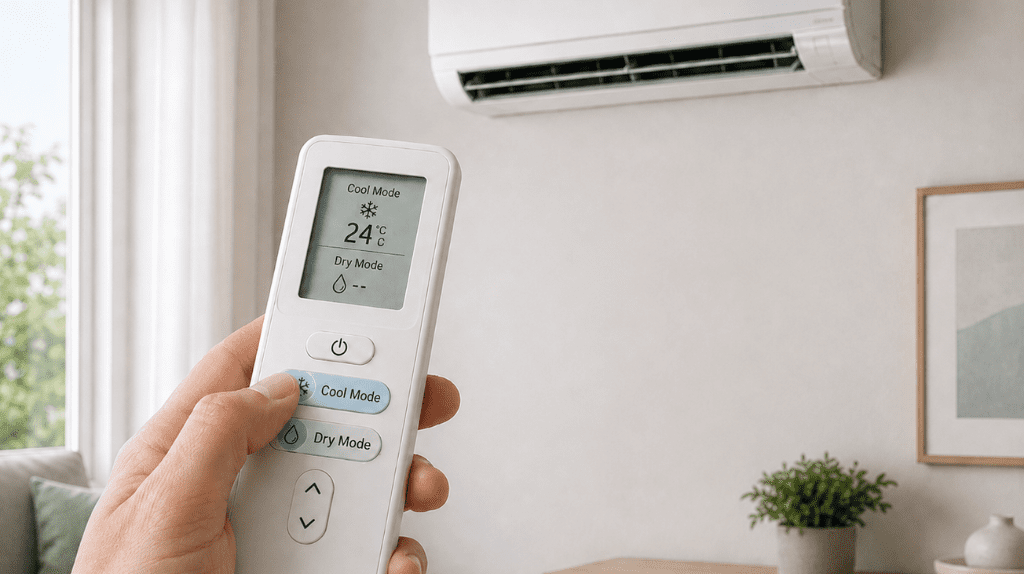
If you’ve ever walked into your home on a sticky Brisbane afternoon and thought, “Why does it feel damp even with the air con on?” you’re not imagining it. In humid weather, the mode you choose can change how comfortable a room feels, and sometimes the “wrong” choice makes things worse.
What dry mode actually does
Dry mode (usually a droplet icon) is built for humidity reduction. Your system runs in a way that encourages moisture in the air to condense on the indoor coil and drain away. The catch is it often uses lower airflow and gentler operation, so it may not feel as instantly cooling as cool mode.
Best-use scenarios for dry mode
Dry mode is helpful when it’s muggy but not scorching, like:
- After rain when the house feels clammy
- Warm evenings where you want less stickiness
- Rooms that feel damp even though the temperature is “fine”
When it can make things worse: On very hot, humid days, dry mode can feel slow and stuffy. If you’re uncomfortable, you’ll likely run it longer or drop the temp further, which can be frustrating (and not always effective).
When Cool mode is better
For any typical Brisbane summer humidity, Cool mode is usually the winner. It actively controls temperature, and as it cools, it also removes moisture as a side effect. Cool is the better choice when:
- It’s hot and humid and you need comfort fast
- The room is busy (people, cooking, sun-facing windows)
- You need predictable, steady results
Ideal settings that actually work
Try these “set and forget” starters:
- Cool mode: 23–25°C, fan on Auto (or Medium if you prefer steadier airflow)
- Dry mode: best used in short blocks (30–90 minutes), then reassess
- Keep doors/windows closed, and use ceiling fans to feel cooler without cranking the thermostat
If you’re constantly forced down to 18–20°C just to feel okay, it’s often a sign something else is going on (airflow, sizing, or a system fault).
Humidity and mould warning signs
Humidity problems aren’t just comfort issues. Watch for:
- Musty smells when the unit starts
- Damp-feeling rooms even when “cool”
- Visible mould around vents, ceilings, curtains, wardrobes
- Condensation that hangs around day after day
When to book a repair or start thinking about a new system
If mode changes don’t help, it’s time to get it checked. In Brisbane, persistent humidity discomfort often points to issues like restricted airflow, drainage problems, or performance faults.
If you’re getting musty odours, weak airflow, poor cooling, or ongoing clamminess, book an air con repair assessment. And if the system is older and struggling every humid season, it may be smarter to price up a replacement or upgrade before peak demand hits.